
WELCOME BONUS 300%
UP TO €2000 + 100
FREE SPINS
UP TO €2000 + 100
FREE SPINS
Home → Blackjack
Blackjack at Slott: Variants, Rules and Payouts
Why Loss Progression Quickly Reaches Table Limit
Blackjack Insurance is a separate side bet costing up to 50% of the main wager when the dealer shows an Ace, but it carries a steep 7.47% house edge. This mathematical disadvantage contrasts sharply with the base game’s optimal 0.46% advantage, making the insurance wager a significant drain on bankroll over time. Players accepting this bet lose value faster than those strictly following basic strategy rules.
The payout structure for standard Blackjack hands at this venue often uses 6:5 instead of the industry-standard 3:2 ratio, adding exactly +1.39 percentage points to the house edge. A $10 bet yields only $12 in winnings under the 6:5 rule compared to $15 under the traditional 3:2 format, drastically reducing expected returns. This single rule change creates a larger barrier to profitability than most other table restrictions combined.
Even with liberal Vegas Strip rules offering late surrender and resplitting aces, the cumulative impact of unfavorable payouts accelerates loss progression toward the maximum table limit. The combination of reduced hand payouts and high-edge side bets ensures that variance depletes funds rapidly during losing streaks. Consequently, players utilizing progressive betting systems face insurmountable hurdles before reaching their profit targets.
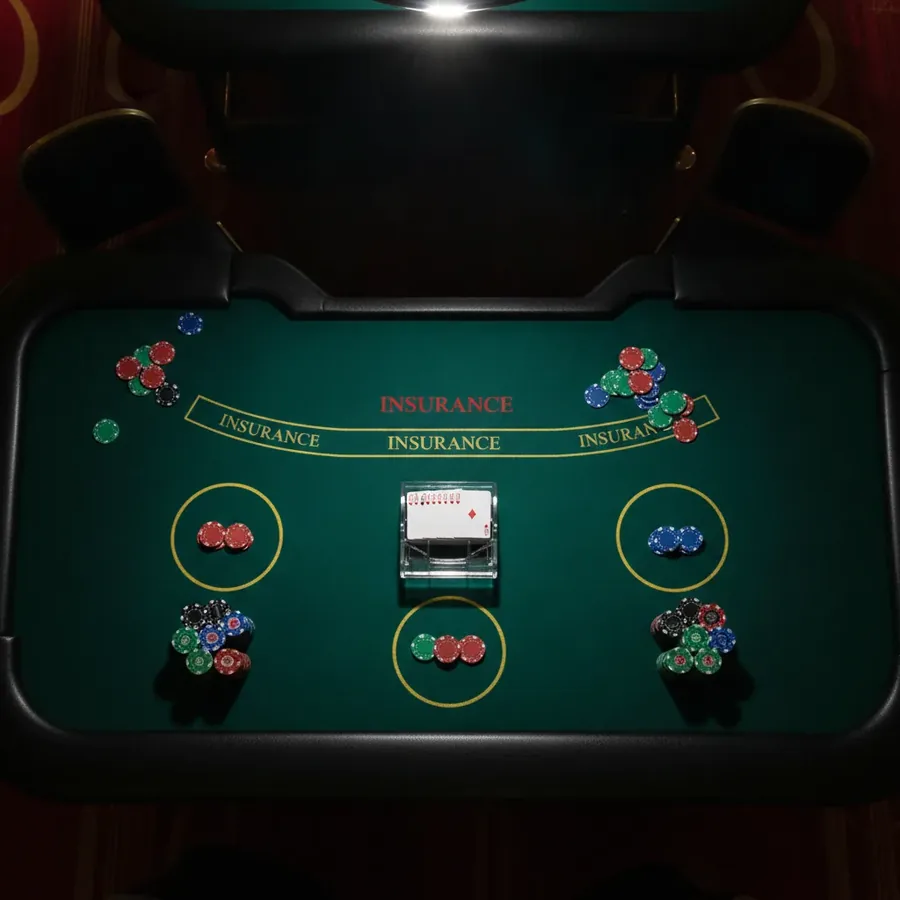
Shoe, Cut Card, and 75 Percent Penetration
Live tables utilize six-deck shoes where the dealer stands on soft 17 (S17), allowing for a theoretical return to player rate of 99.54% under strict basic strategy conditions. This configuration supports doubling after split (DAS) and doubling on any two cards, which are critical parameters for minimizing the casino's statistical advantage. The penetration depth directly influences the effectiveness of card counting strategies employed by advanced players.
Lightning Blackjack by Evolution offers multipliers up to 25x on winning hands, yet maintains a similar structural reliance on six-deck compositions for its core gameplay mechanics. Quantum Blackjack Plus by Playtech introduces quantum multipliers up to 1,000x on three-card combinations, requiring players to adapt their risk management beyond standard shoe dynamics. These variations alter the volatility profile while keeping the underlying deck composition consistent with traditional formats.
Infinite Blackjack provides unlimited seating alongside four distinct side bets, operating within a framework where deck penetration determines shuffle frequency and player opportunity. The absence of a physical cut card in some infinite streams means continuous shuffling or digital simulation affects the perceived penetration metrics significantly. Players must account for these operational differences when evaluating the true house edge across different live dealer variants.
Blackjack doesn't count for every bonus offer
The 300% welcome bonus up to €2,000 plus 100 free spins applies primarily to slot games, excluding table games like Blackjack from contributing meaningfully to the promotion's requirements. Slots contribute 100% toward wagering, whereas Blackjack contributes only 10%, creating a massive disparity in how quickly bonus funds can be cleared through different game types. Attempting to clear the bonus via table games requires exponentially higher turnover volumes.
A €1,000 bonus amount would necessitate €40,000 in slot wagering to meet standard terms, but playing Blackjack would require €400,000 in total bets due to the 10% contribution rate. This mathematical reality makes the bonus effectively inaccessible for pure table game enthusiasts without substantial additional deposits. The restriction ensures that high-volatility slot play drives the majority of promotional engagement rather than low-house-edge table strategies.
Free spins awarded as part of the package are similarly restricted to specific slot titles, further limiting the utility of the bonus for blackjack players seeking immediate cash value. The separation between slot-centric rewards and table-game restrictions prevents cross-pollination of benefits between different gaming categories. Players must navigate these segmented conditions carefully to avoid forfeiting unmet wagering obligations.
Blackjack Contributes Only 10 Percent to Wagering
Table games contribute merely 10% to the wagering requirement for the 300% welcome bonus, forcing players to bet ten times more on Blackjack than they would on slots to achieve clearance. This contribution rate stands in stark contrast to the 100% weighting assigned to slot machines, highlighting the casino's preference for promoting higher-margin products. The discrepancy significantly impacts the feasibility of clearing bonuses through strategic table play.
For a €2,000 bonus with a 40x wagering requirement, meeting the condition via slots demands €80,000 in total stakes, while using Blackjack requires €800,000 in bets. This extreme difference illustrates why relying on low-house-edge games is financially impractical for most recreational players seeking bonus value. The structure inherently penalizes those who prefer skill-based table games over chance-based slots.
The limited contribution extends to all table variants including Infinite Blackjack and Lightning Blackjack, ensuring uniform treatment across the entire live dealer portfolio. No exceptions are made for specific rulesets or side bets, maintaining a consistent barrier to entry for bonus seekers. Players must recognize this constraint before committing time and capital to table games under bonus conditions.
Mobile version needs 1 Mbit bandwidth
The mobile interface for Live Blackjack titles such as Quantum Blackjack Plus requires a minimum bandwidth of 1 Mbit to maintain stable video streaming and real-time interaction. This technical threshold ensures that players can participate in high-stakes sessions with bets ranging from €1 to €5,000 without experiencing disruptive lag or disconnections. Insufficient connectivity may result in missed bets or failed transactions during critical gameplay moments.
Evolution’s Lightning Blackjack and Infinite Blackjack operate seamlessly within this bandwidth constraint, leveraging optimized encoding to deliver crisp visuals even on lower-end mobile devices. The ability to handle up to 25x multipliers or 1,000x quantum bonuses depends heavily on consistent data transmission speeds provided by modern cellular networks. Users on slower connections may experience degraded performance affecting their overall gaming experience.
Players accessing these live tables via mobile should ensure their network connection exceeds the 1 Mbit baseline to fully utilize features like side bets and instant payouts. The requirement applies uniformly across all supported providers including Playtech and Evolution, establishing a universal standard for mobile accessibility. Adhering to this guideline minimizes technical interruptions and maximizes enjoyment of the live dealer environment.
Blackjack variants at a glance
| Variant | Payout | House edge | Rule | Bet range |
|---|---|---|---|---|
| Blackjack Auszahlung 6:5 statt 3:2 (6 Decks) | 98.15% | 1.85% | Ersatz von 3:2 durch 6:5 fügt exakt +1.39 Prozentpunkte zum Vorteil des Casinos hinzu – stärker als jede andere Regeländerung. Bei $10 Einsatz zahlt Blackjack $12 statt $15. | Blackjack 6:5, Gewinn 1:1 |
| Blackjack Split / Double / H17 – Regel-Effekte | n.a. (Regel-Modifikatoren) | H17 +0.22 Prozentpunkte; RSA −0.08 Prozentpunkte; DAS −0.14 Prozentpunkte | Dealer Hits Soft 17 verschlechtert RTP um 0.22 Prozentpunkte; Resplit Aces verbessert um 0.08 Prozentpunkte; Double After Split verbessert um ca. 0.14 Prozentpunkte; 6 Decks statt 8 – ca. 0.02 Prozentpunkte. | Double – Einsatz ×2 mit einer Karte; Split – bis 4 Hände; Ass-Split meist mit einer Karte. |
| Blackjack Insurance / Versicherung (6–8 Decks) | 92.53% | 7.47% | Separate Nebenwette bis 50% der Hauptwette, wenn der Dealer ein Ass hat. Basisstrategie schreibt IMMER Ablehnung vor (außer Karten zählen bei True Count ≥ +3). Bei einem Deck Vorteil ≈ 5.88% | Insurance 2:1 |
| Blackjack Ein Deck, klassische Regeln, 3:2 | 99.85% | 0.15% | Weniger Decks = niedrigerer Vorteil; ein Deck gibt ca. −0.48 Prozentpunkte gegenüber 8 Decks. Oft durch 6:5 Auszahlung kompensiert. | Blackjack 3:2, Gewinn 1:1 |
| Blackjack Liberal Vegas Strip (liberale Regeln, 3:2) | 99.72% | 0.28% | Günstigste Regelkombination: S17 + DAS + Resplit + Late Surrender. Standardabweichung 1,15 | Blackjack 3:2, Gewinn 1:1 |
| Blackjack 6 Decks, S17, DAS, DOA, Auszahlung 3:2, Basisstrategie | 99.54% | 0.46% | Dealer steht auf Soft 17; Verdopplung auf jeder Zweierkarte; Verdopplung nach Split erlaubt; keine Aufgabe. Basisstrategie ist für diesen Wert zwingend | Blackjack 3:2, normaler Gewinn 1:1, Insurance 2:1 |
Bonus Lost Due to 10 Percent Contribution
The Slott welcome bonus provides a 300% match up to €2,000 alongside 100 free spins for new accounts. Table games contribute only 10 percent toward the wagering requirements, drastically reducing the effective value compared to slots which count at 100 percent. This low contribution rate means players must generate significantly more volume on blackjack tables to clear the bonus funds than they would on slot machines.
A player receiving the maximum €2,000 bonus with a standard 40x wagering requirement faces an immense turnover target when playing blackjack. Since each €1 bet on blackjack counts as merely €0.10 toward the goal, the player must place €80,000 in total wagers to meet the conditions. This mathematical reality makes clearing the bonus through table games highly inefficient and costly over time.
The structural disadvantage becomes apparent when comparing the house edge of specific variants against the contribution penalty. Playing Blackjack Liberal Vegas Strip with a 0.28% house edge while contributing only 10 percent creates a compounded loss expectation that erodes the bonus balance rapidly. Players should calculate the net expected loss carefully before attempting to convert these promotional funds into withdrawable cash.
Highroller from 500 EUR per hand
Live dealer blackjack tables at Slott accommodate high stakes, with Infinite Blackjack by Evolution accepting bets between €1 and €5,000 per hand. This upper limit allows serious players to wager substantial amounts without hitting the table cap that restricts many other casinos. The availability of such high limits supports bankroll management strategies for those utilizing progressive betting systems.
Quantum Blackjack Plus Live by Playtech offers an even higher ceiling, permitting wagers up to €5,000 per round. These tables feature quantum multipliers up to 1,000x on three-card combinations totaling 21 points, adding a volatile element to high-stakes play. The combination of high limits and side bet multipliers appeals to players seeking large payouts from single hands.
Lightning Blackjack by Evolution sets its betting range from €1 to €2,500, which is lower than the other two live options but still significant. Lightning multipliers up to 25x can apply to winning hands, providing occasional large returns on moderate high-stake bets. The unlimited player capacity ensures that high rollers never face delays due to table congestion during peak hours.
How many decks are in the shoe?
Standard online blackjack software often utilizes six or eight decks to simulate the pace and security of physical casino shoes. Using fewer decks generally improves player odds, with a single-deck game offering approximately a 0.48 percentage point advantage over an eight-deck game.
Insurance bets, available when the dealer shows an ace, typically rely on six to eight deck compositions for their probability calculations. The house edge for insurance stands at 7.47%, making it a statistically poor choice for most strategic players except those counting cards. This high edge persists regardless of the number of decks, though the true count threshold for positive expectation shifts slightly.
Some classic variants may use a single deck, but this configuration often comes with compensated rules like 6:5 payouts for blackjack. A single-deck game with standard 3:2 payouts and favorable rules can offer superior odds compared to multi-deck versions. However, the prevalence of 6:5 payouts in single-deck formats frequently negates the theoretical benefit of having fewer cards in play.
What doesn't count as Blackjack after Split?
When splitting pairs, specifically aces, casinos typically restrict subsequent actions to maintain the game's balance and prevent excessive advantage. Most rules allow only one additional card per split ace, meaning a second ace drawn cannot be split again or doubled down. This restriction prevents players from creating multiple strong hands from a single pair, limiting potential winnings.
Double After Split (DAS) is a favorable rule allowing doubling on hands created by splits, but it does not apply to split aces in most jurisdictions. If a player receives a ten-value card after splitting aces, the hand totals 21, but further doubling is prohibited under standard liberal rules. This limitation reduces the flexibility of basic strategy execution compared to non-split twenty-one hands.
Resplitting aces is also generally forbidden or restricted to a single re-split in many online variants, unlike other pairs which may be split up to four times. This rule affects the long-term return, as the inability to maximize hands from aces increases the house edge slightly. Players relying on aggressive splitting strategies must adjust their expectations for ace pairs accordingly.
Double Down after Split: which tables allow it
Double Down after Split (DAS) is a critical rule modifier that significantly lowers the house edge in blackjack games. The Liberal Vegas Strip variant explicitly includes DAS along with resplitting and late surrender, achieving a low 0.28% house edge. This rule allows players to double their bet on any hand resulting from a split, increasing potential profit opportunities.
In contrast, some standard six-deck games with Soft 17 standing and DAS still carry a higher house edge of 0.46% despite allowing doubles after splits. The absence of late surrender in these versions partially offsets the benefit of DAS, requiring strict adherence to basic strategy to minimize losses. Players should verify if DAS is permitted on all ranks or just specific ones like 9, 10, or 11.
Blackjack Insurance is a separate side bet paying 2:1, distinct from the primary game mechanics involving doubling after splits. While DAS improves the main game's RTP, insurance remains a negative expectation bet for most players unless card counting indicates a +3 true count. Understanding the distinction helps players focus on fundamental strategy adjustments rather than peripheral bets.
Splitting tens costs expected value: better stand
The house edge increases by 0.22 percentage points when the dealer hits on soft 17 instead of standing, a rule change that directly reduces player returns across all blackjack variants at Slott. This specific rule modification negatively impacts the theoretical return to player rate, making every hand slightly more expensive for the gambler compared to tables where the dealer stands. Consequently, players should prioritize games with stricter dealer rules to minimize long-term losses and preserve their bankroll against the increasing house advantage.
Resplitting Aces improves the RTP by approximately 0.08 percentage points, offering a marginal benefit that is significantly smaller than the cost of hitting on soft 17. This rule allows players to split aces multiple times if they receive another ace, but it is often restricted to receiving only one additional card per split hand. Players utilizing basic strategy must account for this limited flexibility, as the small gain does not offset other unfavorable table conditions or high house edges found elsewhere.
Statistics display saves the last 100 rounds
Lightning Blackjack by Evolution offers multipliers up to 25x on winning hands, with betting limits ranging from 1 to 2,500 EUR for unlimited players at the virtual table. This live dealer game provides an RTP of 99.56%, which is higher than many standard table games but relies heavily on random number generation for the lightning strikes. The visual interface displays previous round outcomes, allowing users to track recent results without influencing the independent nature of each subsequent deal or spin outcome.
Contact
Live - online chat
Banking






Providers








Slott 2026